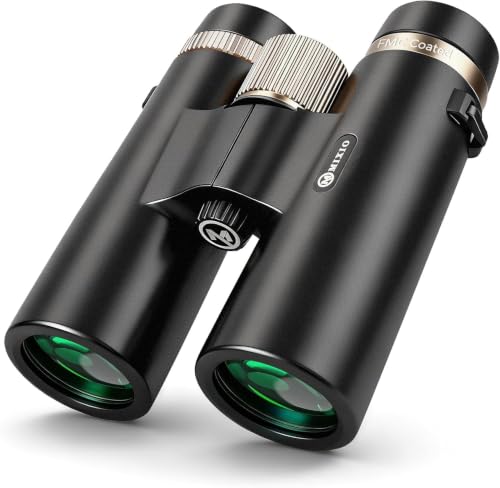
Best Astronomy Binoculars Under $150 (2026): M MIXIO 12x42 vs 15x56 Monocular vs 10x25
Three M MIXIO optics, three different jobs: a full-size 12x42 binocular for handheld stargazing, a 15x56 monocular with a tripod and phone holder, and a 10x25 compact for travel. Here is which one suits astronomy, based on each Amazon listing.
What are the best binoculars for astronomy under $150?
Among the three M MIXIO optics this guide covers, the M MIXIO 12x42 binoculars are the pick for astronomy: full-size 42 mm objectives, 12x magnification, a listed field of view of 303 ft at 1,000 yards, eyecups that adjust for eyeglass wearers, and a listing that names stargazing and "starry night skies" among its uses — the only one of the three that mentions the night sky at all. The M MIXIO 15x56 monocular is the one to choose if you would rather put an optic on the tripod that comes in its box and try phone photos through the eyepiece: one eye, but the biggest objective here. The M MIXIO 10x25 compact binoculars are a travel and family glass first; 25 mm objectives make them the weakest of the three after dark. Prices change, so confirm the current price on each listing against your budget before you buy.
Updated October 2026.
We did not test these products ourselves; this guide is built from Amazon's product listings.
No spam. Unsubscribe anytime.
Best for: match the pick to the use
| Use case | Pick | Why, per the listing |
|---|---|---|
| Handheld stargazing: star fields | M MIXIO 12x42 binoculars | 12x on 42 mm objectives, a 303 ft field at 1,000 yards, "stargazing" named as a use, waterproof design |
| Steady viewing on a tripod, and phone photos through the eyepiece | M MIXIO 15x56 monocular | 15x on a 56 mm objective; a retractable tripod and a universal phone holder are in the box |
| Travel, hiking and kids who will also look up at night | M MIXIO 10x25 compact binoculars | Compact one-handed body that fits small and medium hands; storage case and neck strap included |
| Eyeglass wearers | 12x42 or 15x56 | Both listings describe eyecups that work for glasses wearers; the 10x25 listing does not say |
| Wet, salty or rough conditions | M MIXIO 12x42 binoculars | The only one of the three whose listing states a waterproof design (the 10x25's listing states shock resistance but not waterproofing) |
Same brand, three different instruments
One brand ties these together, but the listings describe three different kinds of instrument, and the choice is about format first. The first is a full-size 12x42 binocular — 1.3 lb and 6.1 × 5 × 2.2 inches opened out, per the listing. The second is not a binocular at all: it is a 15x56 monocular, a single-barrel telescope the listing says matches "the size and weight of a standard smartphone," bundled with a retractable tripod, a universal phone holder, a hand strap, lens covers, a cloth bag and a manual. The third is a 10x25 compact binocular built around a small body with a textured non-slip grip that, per the listing, fits small and medium hands and works one-handed.
Read each name as magnification × objective diameter in millimeters: 12x42 is twelve-power through 42 mm front lenses.
How to read the numbers after dark
Two numbers matter more at night than by day.
Objective diameter sets how much light the optic gathers, and at night light is everything: the 15x56 monocular leads (one 56 mm lens), the 12x42 follows (two 42 mm lenses), and the 10x25 trails by a wide margin.
Exit pupil — the objective diameter divided by the magnification — sets how bright the image looks and how easy it is to keep your eye lined up with it. Worked out from the listed figures (they are calculations, not listed specs), that is 3.5 mm for the 12x42, roughly 3.7 mm for the 15x56 and 2.5 mm for the 10x25, so the compact gives the dimmest view of the three.
Magnification magnifies shake, too. Any handheld optic trembles with your pulse, and 12x or 15x makes that tremor visible on a star. At 12x, bracing your elbows on a wall or the arms of a reclining chair is enough for most people; at 15x a tripod is the honest answer, which is why the monocular's included tripod matters as much as its objective. The 12x42 listing does not mention a tripod socket, so check the current listing before planning to mount it.
Spec comparison, from the listings
| M MIXIO 12x42 binoculars | M MIXIO 15x56 monocular | M MIXIO 10x25 compact binoculars | |
|---|---|---|---|
| Type | Full-size binocular | Monocular | Compact binocular |
| Magnification / objective | 12x / 42 mm | 15x / 56 mm | 10x / 25 mm |
| Exit pupil (calculated, not listed) | 3.5 mm | About 3.7 mm | 2.5 mm |
| Field of view | 303 ft at 1,000 yards | Not stated ("wide-angle") | Not stated ("large view") |
| Prisms and coatings | BAK4 prisms, fully multi-coated (FMC) lenses | BAK-4 prism, "HD optics" | BAK4 prism, FMC green multi-coated lenses |
| Eyecups | Adjustable, for eyeglass wearers and non-wearers | Twist-up, "including glasses wearers" | Not stated |
| Focus | Central wheel plus a diopter ring on the right eyepiece | Focus wheel | Center focus wheel |
| Weight and size | 1.3 lb; 6.1 × 5 × 2.2 in expanded | "Size and weight of a standard smartphone"; no figure | Not stated; "compact" and "lightweight" |
| Weather and shock | Waterproof design, shock-resistant construction | Not stated | Shockproof armored housing; waterproof not stated |
| In the box | Not stated | Monocular, retractable tripod, universal phone holder, hand strap, lens covers, cloth bag, manual | Storage case, adjustable neck strap, lens cloth |
| Night sky named as a use | Yes — "stargazing," "starry night skies" | No — "low-light conditions" is the closest | No — "low-light outdoor activities" is the closest |
M MIXIO 12x42 binoculars — the astronomy pick
Per the listing, these are full-size 12x42 binoculars with a 303ft/1000-yard field of view, 20mm eyepieces, BAK4 prisms and fully multi-coated (FMC) lenses, at an actual weight of 1.3LB and expanded dimensions of 6.1 × 5 × 2.2 in. Stargazing appears in the listing's list of uses — alongside camping, travel, cruises, bird watching, hunting, hiking, operas, concerts and sports events — and its coatings bullet names "starry night skies" as the far end of its range.
Per the listing, the adjustable eyepiece design suits both eyeglass wearers and those who do not wear glasses. Focus is a central wheel with a diopter adjustment ring on the right eyepiece, per the listing, and the body has a non-slip texture, rubber grips on both sides and a waterproof, shock-resistant construction that the listing says is built to withstand saltwater corrosion.
What that adds up to for astronomy: the only stated field of view of the three, two-eyed viewing, and 42 mm objectives for the stargazing the listing advertises. The 12x figure sits at the top of what most people can hold steady, so plan to brace. One caution: the listing claims a light-transmission percentage without saying where that figure comes from, so read that line as marketing rather than a comparable specification.
Check the current price on Amazon
M MIXIO 15x56 monocular — the tripod-and-phone pick
Per the listing, this is a 15x56 monocular telescope with a BAK-4 prism, a twist-up eyecup and a focus wheel, and the package includes a retractable tripod, a universal phone holder, an anti-slip hand strap, lens covers, a protective cloth bag and a user manual. The listing says it matches "the size and weight of a standard smartphone" and includes a hand strap for carrying on the go. Its twist-up eyecup is described as comfortable for all users, "including glasses wearers," and the phone bracket and tripod are described as tool-free to install and compatible with most smartphones.
The listing does not give a weight figure, a field-of-view figure or any waterproof rating, and none of the uses it names is astronomy: hiking, climbing, hunting, bird watching, ball games, concerts, wildlife observation and sightseeing, with "low-light conditions" the closest it comes to night use.
Why it still earns a place here: the 56 mm objective is the largest of the three, and the included tripod reduces the shake that 15x creates, so on paper this is the steadiest view of the group — through one eye. Monocular viewing is less comfortable over a long session than binocular viewing; what you gain is a mounted optic and a phone holder you could use to try Moon snapshots. Its light-transmittance percentage claim deserves the same caution as the 12x42's.
Check the current price on Amazon
M MIXIO 10x25 compact binoculars — the travel and kids pick
Per the listing, these are 10x25 compact binoculars with a BAK4 prism and FMC green multi-coated lenses, a compact body with a textured non-slip grip that fits small and medium hands, and a shockproof armored housing, and they come equipped with a storage case, adjustable neck strap and lens cloth. The listing pitches them at adults and kids alike and at stable one-handed use, and its uses run to bird watching, wildlife, safari, hiking, cruise travel, concerts, sports events and theater — "low-light outdoor activities" is the nearest it gets to the night sky.
The listing does not state a weight, a field of view, the eyecup type or any waterproofing. In practice, 25 mm objectives gather far less light than 42 mm or 56 mm ones, so this is the pick for someone whose main use is daytime travel or a child's pair, with the night sky an occasional extra. If astronomy is the reason for buying, choose the 12x42 instead.
Check the current price on Amazon
Choosing between them
- Both eyes and the night sky named on the listing: the 12x42. Brace your elbows at 12x.
- A steady, mounted view or phone photos: the 15x56 monocular, because the tripod is in the box.
- Compact, child-friendly, mostly daytime: the 10x25 compact.
- Glasses: the 12x42 and 15x56 listings both address eyeglass wearers; the 10x25 listing is silent.
- Rain or salt spray: only the 12x42 listing states a waterproof design.
Whichever you choose, confirm the price on the current listing before you buy.
If a telescope is the better buy
Binoculars suit wide star fields and learning the sky, but the planets reward a telescope's aperture and magnification. If that is where your interest lies, beginner telescopes worth owning covers that route, and the best telescopes for kids and family stargazing covers the family case the 10x25 is otherwise aimed at. If the 15x56's phone holder caught your eye, smartphone astrophotography adapters and filters is the companion read.
FAQ
What are the best binoculars for astronomy under $150?
Among the three M MIXIO optics in this guide, the 12x42 binoculars: 42 mm objectives, 12x magnification, a 303 ft field at 1,000 yards and a listing that names stargazing. Confirm the current price on Amazon.
Is a monocular good for astronomy?
It can be, with a tripod. The M MIXIO 15x56 monocular has the largest objective of the three, and its listing says it ships with a retractable tripod and phone holder, but you view with one eye, which is less comfortable over a long session than binoculars.
Do I need a tripod for 12x binoculars?
Not strictly, but 12x magnifies hand tremor, so brace your elbows on something solid. The 12x42 listing does not mention a tripod socket; check the current listing if you want to mount them.
Can I use these with glasses on?
The 12x42 listing describes an adjustable eyepiece design for eyeglass wearers, and the 15x56 listing describes a twist-up eyecup that includes glasses wearers. The 10x25 listing does not address glasses.
Which of the three is waterproof?
Only the 12x42 listing states a waterproof design. The 10x25 listing states a shockproof armored housing but not waterproofing, and the 15x56 listing states neither.
Sources
- Amazon product listing: "M MIXIO 12x42 Binoculars for Adults High Powered Waterproof with Large View | Professional HD Binoculars BAK4 Prism FMC Lens Bird Watching Binoculars for Cruise Ship Hunting Camping Travel Sport Safari" — title and feature bullets.
- Amazon product listing: "M MIXIO 15x56 Monocular Telescope High Power Monoculars High Definition | Telescope for Adults Kids with Smartphone Adapter&Tripod with BAK-4 Prism Hunting, Bird Watching, Travel Camping, Hiking" — title and feature bullets.
- Amazon product listing: "M MIXIO 10x25 Compact Binoculars for Adults and Kids High Powered | FMC BAK4 Prism,Small & Lightweight Binoculars for Bird Watching, Hiking,Camping,Travel,Cruise Ship,Concert,Safari,Sports" — title and feature bullets.
- No M MIXIO manufacturer specification page was used: the brand's product information could not be found outside retail marketplaces in this search, so every product fact above comes from the three Amazon listings.
Affiliate Disclosure